Readers' Arcades
Best Romance Book Recommendations, Reviews & Awards
Discover the best romance book recommendations, honest reviews, book contests, and award-winning love stories at ReadersArcades. Explore quotes, discover your next read, and find books you will love.
Because great romance books deserve to be found.
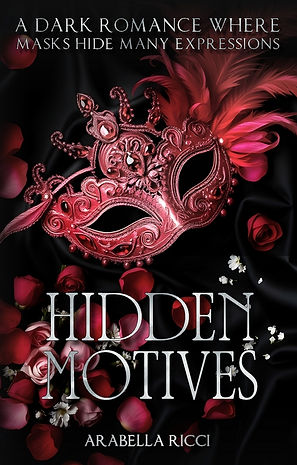
Hidden Motives
Arabella Ricci
Editorial Reviews:
Readers' Arcades Editorial Review of Hidden Motives by Arabella Ricci
A betrayed daughter infiltrates the inner circle of the man who destroyed her family, wearing her mother's faded pink mask and a heart full of seven years of hatred—only to discover that the coldest masks sometimes hide the warmest hearts. That's the irresistible setup of Arabella Ricci's Hidden Motives, a dark historical romance published by Polish publishing house Hasalynx Press that plunges readers into the shadowed canals and candlelit palazzos of eighteenth-century Venice. Enemies to lovers, revenge, morally grey hero, forbidden attraction—this one checks every box and then sets them on fire.
Maddalena Lando has spent seven years nursing one goal: destroy MarcAntonio Morosini, the cold financier who called in her father's debt and shattered her family. She returns to Venice with a stolen identity, a carefully constructed performance, and absolutely no intention of falling for the man she's sworn to ruin. But MarcAntonio sees straight through her—he's built an empire reading faces across negotiation tables, and her tells sing beneath her careful disguise. Yet instead of exposing her, he keeps her closer. Invites her into his world of mask galleries and midnight gondolas. Touches her like she matters. The chemistry between them burns slow and deep, each stolen glance and almost-touch building toward a reckoning that will leave you breathless.
Readers who loved the obsessive, possessive heroes of The Duke and I or the lush, dangerous atmosphere of The Venetian's Wife will find themselves completely undone by MarcAntonio. He's not just cold and controlled—he's a man who has built an empire on reading faces, and he knew who she was from the second week. He chose her anyway. That awareness transforms every interaction into a delicious game of cat and mouse, where both players know the rules and neither can stop playing.
For those seeking Hidden Motives by Arabella Ricci reviews, know that this book doesn't shy away from the darkness its premise promises. This is enemies-to-lovers with teeth—where the hero's hands are as bloodstained as his past, where every moment of tenderness feels earned through pain, and where love rises from the ashes of hatred. The Venetian setting is gorgeous and immersive, with canal-side palazzos, masquerade balls at the Ridotto, and shadowy alleyways where secrets are exchanged like currency. But the atmosphere isn't just pretty backdrop—it's integral to the story, mirroring the masks everyone wears and the truths hidden beneath glittering surfaces.
What makes this book stand out in the crowded dark romance space is its willingness to complicate the revenge narrative. Just when you think you know who the villain is, Ricci pulls the rug out—revealing that MarcAntonio was merely an instrument in someone else's devastating scheme. The true architect of the Lando family's destruction has been pulling strings from the shadows all along, and the final confrontation on the abandoned island of Torcello delivers twists that genuinely surprise. This isn't a story of easy redemption; it's about two broken people who find themselves in each other's ruins and have to decide if they can build something new from the wreckage.
The tension throughout is exquisite. From the possessive scene at the Ridotto where MarcAntonio shatters glass rather than let another man touch her, to the rose-petal-strewn bedchamber where lines are crossed that can never be uncrossed, to the devastating moment when Angelo's ink records every lie and the truth lands on MarcAntonio's desk—every beat lands with emotional impact. Ricci understands that the best dark romance makes you feel the danger alongside the desire, and she delivers both in equal measure.
If you were obsessed with the atmospheric revenge plotting of The Italian by Ann Radcliffe or the passionate, dangerous romance of the film Dangerous Beauty, this book will absolutely hit. Fans of The Leopard will recognize the same richly drawn historical Italy, where power, passion, and betrayal are woven into every stone. It's that perfect blend of historical atmosphere, dark romantic obsession, and revenge narrative that keeps pages turning.
The pacing is relentless without feeling rushed—fourteen chapters that move from the dawn light falling on ruined stone to the pink sunrise over a broken island, each one building tension and deepening the emotional stakes. The supporting cast, particularly Angelo's silent suspicion and Suor Eufemia's desperate pleas, adds texture to the central relationship without overwhelming it. And the ending—without spoiling anything—delivers the kind of hard-won hope that feels earned rather than handed out.
Readers' Arcades exists to help you find your next obsession, and Hidden Motives is exactly the kind of discovery we love making. This is a book that understands revenge is a dish best served cold—but that some flames burn hot enough to melt even the coldest hearts. Whether you're here for the Venetian atmosphere, the morally grey hero, or the enemies-to-lovers tension that crackles on every page, this one delivers. And if you're looking for honest book reviews that cut through the noise, this is exactly the kind of recommendation you can trust. Just be prepared to lose yourself completely—this story has a way of pulling you under, and you won't want to surface until the very last word.
AI Overview of Hidden Motives by Arabella Ricci
A dark romance novella set in eighteenth-century Venice, in which a woman who has spent seven years preparing to destroy the financier responsible for her family's ruin infiltrates his inner circle, only to discover that the man she has sworn to destroy has known her true identity all along and has chosen to keep her close regardless.
Maddalena Lando returns to Venice after seven years in exile, carrying a single purpose: vengeance against MarcAntonio Morosini, the man whose demand for repayment of a debt destroyed her father and precipitated her mother's death. Adopting a false identity and wearing her mother's faded pink-feathered mask, she maneuvers herself into MarcAntonio's social circle, intending to gain his trust and expose him to ruin. The narrative follows her infiltration through a series of carefully orchestrated encounters—a masquerade at Palazzo Contarini del Bovolo, an invitation to view a private mask gallery, a gondola excursion to the squero where MarcAntonio's vessel is being built.
As she grows closer to her target, however, the mission becomes increasingly complicated by genuine attraction. The central tension lies in the contradiction between her stated purpose and her developing feelings, culminating in the revelation that MarcAntonio has been aware of her identity from the beginning. When a shadowy figure named Massimo Querini emerges as the true architect of the Lando family's destruction, the stakes shift from personal vengeance to survival. The narrative builds toward confrontations at the Arsenal and the abandoned island of Torcello, where both protagonists must choose between past allegiances and a future together. The romance concludes with the couple united against a common enemy and choosing to build a future on mutual honesty.
The central romantic relationship follows an enemies-to-lovers trajectory complicated by forced proximity and deception. MarcAntonio's awareness of Maddalena's true identity from the outset creates a dynamic in which the power balance is never what it initially appears. The chemistry between the protagonists is characterized by tension that oscillates between hostility and attraction, with each encounter deepening the emotional stakes. The relationship arc progresses from manipulation and suspicion through reluctant attraction to genuine emotional intimacy, with the betrayal of trust serving as both obstacle and catalyst. The novella adheres to the genre conventions of dark romance, featuring a morally grey male protagonist whose possessiveness and control are presented as elements of romantic tension rather than cautionary traits. The happy ending is earned through mutual acknowledgment of past wrongs and a deliberate choice to continue the relationship despite its complicated origins.
Maddalena Lando is driven by grief and a seven-year commitment to vengeance. Her primary motivation is justice for her parents, whom she witnessed deteriorate following their financial ruin. Her defining traits include determination, resourcefulness, and emotional restraint, which she has cultivated as defenses against the vulnerability that led to her family's destruction. Over the course of the narrative, she evolves from a single-minded avenger to a woman capable of recognizing moral complexity and choosing connection over hatred. Her central flaw is her inability to see beyond the narrative she has constructed about her enemy, which nearly prevents her from recognizing the truth about both MarcAntonio's role and her own feelings.
MarcAntonio Morosini is a wealthy Venetian financier who has rebuilt his family's fortune after his father's dissolution. His personality is characterized by control, emotional restraint, and keen observational skills, which have made him successful in business but isolated in personal relationships. His primary motivation shifts over the course of the narrative from maintaining his carefully constructed world to preserving the connection he has formed with Maddalena despite knowing her purpose. His central flaw is his history of emotional detachment, which allowed him to call in debts without considering their human consequences. His evolution involves confronting his own unwitting role in the Lando family's destruction and choosing vulnerability over control.
The narrative is set in eighteenth-century Venice, a location that functions as more than backdrop. The city's canals, palazzos, and public spaces—the Caffè Florian, the Ridotto gambling house, the Scala a Bovolo, the Arsenal, the abandoned island of Torcello—provide both atmospheric texture and thematic resonance. Venice's culture of masquerade, where identity is fluid and concealment is the norm, mirrors the central theme of deception and revelation. The setting's historical context, a period when the Republic's power was waning, infuses the narrative with an undertone of decay and impermanence that contrasts with the protagonists' attempt to build something lasting.
The atmosphere is one of shadow and candlelight, reflecting the moral ambiguity of the central relationship. The pink-feathered mask that Maddalena wears, which belonged to her mother, functions as a symbol of both inheritance and concealment—it connects her to her family's past while enabling her deception. The gambling chip bearing the Lando crest, which she carries in her pocket, serves as a tangible reminder of her purpose and the stakes of her mission. The ledger page containing her father's signature, hidden in her sketchbook, represents the written record of loss and the documentary evidence of her family's destruction. The rose petals in MarcAntonio's bedchamber, which stain the sheets like blood, symbolize the intersection of passion and violence that characterizes their relationship. The forcola on the gondola, which MarcAntonio explains as the element that transforms a vessel into an extension of the gondolier's body, serves as a metaphor for the way each character completes the other.
This novella is intended for readers who seek dark romance narratives featuring enemies-to-lovers dynamics, morally grey heroes, and revenge plots. The ideal reader appreciates historical settings that are richly rendered but does not require strict historical accuracy. This reader seeks emotional intensity, high stakes, and sexual tension that builds gradually across the narrative. The novella will appeal to those who enjoy possessive male protagonists whose control masks vulnerability, and heroines who are capable of both vulnerability and strength. The reader should be comfortable with morally complex characters whose actions are not always defensible, and should appreciate narratives in which the central relationship develops in a context of deception and danger. The novella's length and pacing suit readers seeking a complete romantic arc in a concentrated format.
Published by Hasalynx Press, the work is positioned within the dark romance and historical romance categories. This novella may not appeal to readers who prefer contemporary settings or avoid historical romance. The narrative's treatment of possessiveness and control as romantic elements may not suit readers who prefer egalitarian relationship dynamics or who object to depictions of morally grey male protagonists. The revenge premise and the protagonist's willingness to engage in deception may not resonate with readers who prefer straightforward romantic narratives without moral complexity.
Hasalynx Press Editorial Review of Hidden Motives by Arabella Ricci
In the shadowed canals of eighteenth-century Venice, where masquerade conceals as much as it reveals, Arabella Ricci's Hidden Motives unfolds as a dark romance of remarkable restraint and psychological precision. The novella operates within the familiar architecture of the enemies-to-lovers tradition while simultaneously interrogating its foundations, asking whether hatred can truly transform into love when the object of that hatred has been the unwitting instrument of destruction. This is a work that understands revenge as both motive and obstacle, and in its fourteen tightly constructed chapters, it traces the slow, painful dissolution of a seven-year vendetta with the careful attention of an artist watching pigment dissolve into water.
The novella opens with a scene of deliberate desolation: Maddalena Lando, returned to Venice after seven years of exile, stands before the ruined house on the Via della Scuola where her father died, destroyed by a debt called in by the cold financier MarcAntonio Morosini. This opening establishes the work's central tension with admirable economy—the pink light that bleeds across the canal suggests both dawn and wound, and Maddalena's claim that she feels "cold, diamond-hard purpose" rather than grief signals a protagonist who has transformed herself into a weapon. Ricci's prose throughout maintains this crystalline quality, each sentence constructed with the precision of a blade being sharpened against a whetstone.
The setting functions as far more than picturesque backdrop. Venice here is a city of mirrors, canals that reflect and distort, alleyways that double back on themselves, and always the omnipresent masks that allow its inhabitants to become other people while remaining themselves. The masquerade at Palazzo Contarini del Bovolo, where Maddalena first encounters MarcAntonio wearing her mother's faded pink-feathered mask, exemplifies the work's thematic preoccupation with disguise. MarcAntonio wears the traditional white bauta, a mask that renders the face in pure marble—a fitting metaphor for a man who has constructed himself as an unreadable surface. The spiral staircase that Maddalena ascends, "coiling upward like a white stone serpent," is more than architectural detail; it represents the labyrinthine path of deception and revelation that the narrative will trace.
Ricci demonstrates notable historical attentiveness without allowing period detail to overwhelm character. The Caffè Florian, the Squero di San Trovaso where gondolas are built and repaired, the Ridotto gambling house, the church of Santa Maria dei Miracoli—these are not mere backdrop but active participants in the drama. The author understands that eighteenth-century Venice was a city in terminal decline, its power fading even as its pleasures intensified, and this awareness infuses the novella with an undertone of melancholy. The Morosini palazzo, with its mask gallery and candlelit bedchamber, exists in tension with the abandoned Lando house and the crumbling splendors of Torcello, suggesting that all empires—personal as well as political—eventually crumble.
The relationship between Maddalena and MarcAntonio develops with a credible slowness that distinguishes Hidden Motives from more schematic romance narratives. Their first encounter at the masquerade establishes immediate attraction, but it is attraction complicated by knowledge: Maddalena knows who he is, and we gradually learn that MarcAntonio knows who she is as well. This mutual deception, revealed when Angelo Priuli's investigation brings evidence to his master's desk in Chapter Nine, transforms the narrative's central dynamic. MarcAntonio has always known. His pursuit of Maddalena has not been manipulation of a woman who has no choice but to play along, but rather a kind of counter-offer: he knows what she intends, he knows who she is, and he chooses her anyway. This revelation reconfigures the power balance between them and raises the novella's most provocative question: Can love exist between people whose relationship begins in mutual deception?
The prose itself merits attention for its measured elegance. Ricci's sentences move with the rhythm of canal water—sometimes placid and reflective, sometimes quickened by undercurrents of tension. Consider the description of the gondola under construction at the squero: "The curve was mathematical perfection, a balance of function and beauty that spoke of generations of knowledge passed from hand to hand." This precision extends to dialogue as well, where characters speak with the formality appropriate to their time and station without ever sounding arch or anachronistic. MarcAntonio's confession to Maddalena in his study—"I have always known. From the second week"—carries devastating weight precisely because of its restraint.
The novella situates itself within a rich literary tradition. The Venetian setting inevitably evokes comparisons to Thomas Mann's Death in Venice, though Ricci's Venice is less a place of dissolution than of masquerade, where identity itself becomes fluid and unreliable. The revenge narrative recalls Dumas's The Count of Monte Cristo, but where Edmond Dantès ultimately finds transcendence through forgiveness, Ricci's protagonist must navigate a more ambivalent resolution. The love story, with its morally grey hero and the woman who cannot decide whether to destroy or save him, participates in a tradition that includes the Brontës, Daphne du Maurier, and more recently the proliferation of dark romance novels that have found enthusiastic readership online. Yet Ricci's work distinguishes itself through its refusal of easy resolution; the relationship between Maddalena and MarcAntonio remains complicated even at the novella's close, built on acknowledged harm and deliberate healing rather than miraculous transformation.
The supporting characters serve to illuminate the central relationship rather than distract from it. Angelo Priuli, whose ink records every lie and whose suspicion of Maddalena is never fully assuaged, provides a conscience and a warning voice. His devotion to MarcAntonio is genuine, as is his fear that his master has been undone by his heart. Suor Eufemia, the nun who saved Maddalena from starvation and taught her to channel grief into purpose, represents the pull of the past, the weight of obligation to the dead. Her confrontation with Maddalena on the Rialto Bridge is among the novella's most affecting scenes, a conversation in which two women who love each other must acknowledge that they want different futures for the one they both cherish.
The third act introduction of Massimo Querini, the shadowy figure who orchestrated the Lando ruin and who has been manipulating events from the beginning, might in less skilled hands feel like a deus ex machina. Here, however, it functions as the logical culmination of the novella's thematic concerns. The man who has been hidden behind masks, who has used others as instruments, who has collected the ruins of seventeen families as a collector might gather art—Massimo is the ultimate expression of a Venice built on deception and exploitation. His defeat at the cathedral on Torcello, where dawn light transforms even his ordinary features into something almost tragic, allows the narrative to achieve closure without pretending that the past can be erased. What has been lost remains lost. What has been broken cannot be perfectly restored. But there is, Ricci suggests, a kind of redemption in choosing to build something new on the ruins.
The psychological complexity of both protagonists distinguishes this work from more formulaic romance fiction. Maddalena's journey from weapon to woman—from the girl who has shaped herself entirely for vengeance to someone capable of choosing connection over destruction—is rendered with convincing interiority. Her moments of doubt, her recognition that MarcAntonio is "not what she expected," her slow unwilling awareness that the connection between them has become more important than the mission that defined her—these are not sudden transformations but gradual accommodations to an increasingly complex reality. Similarly, MarcAntonio's evolution from cold financier to vulnerable partner is earned through careful accumulation of detail. His confession about his father's drinking, his mother's neglect, his lifelong armor of control—these revelations come at moments of genuine intimacy, not as convenient backstory, and they serve to make him a credible object of love rather than merely a collection of attractive flaws.
The novella's treatment of revenge as a theme merits particular attention. Hidden Motives asks whether vengeance can ever truly satisfy, whether the destruction of the person who has harmed us can restore what has been taken. Maddalena's search for justice becomes increasingly complicated as she discovers that the man she intended to destroy was himself the instrument of another's scheme. Her mother's final words—"Remember who destroyed us. Remember, and balance the scales"—haunt her throughout, yet the scales she eventually balances are not weighted solely against MarcAntonio. Massimo's defeat does not resurrect her father or return her mother's years. What it does do is allow Maddalena to choose her own future rather than be defined by her past. Those seeking Hidden Motives by Arabella Ricci reviews will find in this work a treatment of revenge as neither glorious nor futile, but as a process of self-discovery that may lead to unexpected destinations.
The novella's conclusion, with its pink dawn rising over ruined Torcello as MarcAntonio and Maddalena leave the cathedral together, does not claim that all has been resolved. The phrase "[title] by [author name] review" might capture the attention of those researching this work, but what they will find is a narrative that resists simple categorization. MarcAntonio's wound remains, a physical counterpart to the emotional damage both characters carry. Suor Eufemia's grief at losing her protegee to the man she had been trained to hate is acknowledged but not resolved. Massimo's defeat leaves the larger question of justice unanswered. What the novella does offer is the possibility of beginning again—not from innocence, which is lost, but from honesty, which is hard-won.
In the crowded field of historical romance, Hidden Motives distinguishes itself through its refusal of sentimentality, its attention to the textures of eighteenth-century Venetian life, and its willingness to follow its characters into moral complexity. This is a work that understands love not as the erasure of past wounds but as the difficult decision to build a future together despite them. The Hasalynx Press editorial voice recognizes in Ricci's novella a contribution to the dark romance tradition that honors the genre's conventions while transcending them through literary craft and psychological depth. The city of masks, where everyone wears a face not their own, becomes the perfect setting for a story about the slow, painful work of revealing one's true self to another—and discovering that what is revealed, however flawed, might still be worthy of love.