Readers' Arcades
Best Romance Book Recommendations, Reviews & Awards
Discover the best romance book recommendations, honest reviews, book contests, and award-winning love stories at ReadersArcades. Explore quotes, discover your next read, and find books you will love.
Because great romance books deserve to be found.
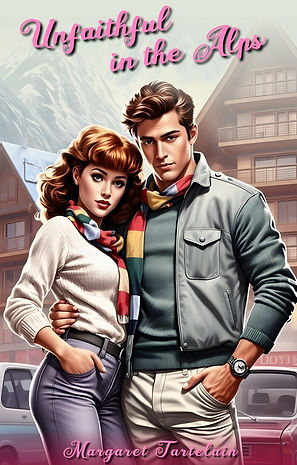
Unfaithful in the Alps
Unfaithful in the Alps
Editorial Reviews:
Readers' Arcades' Editorial Review of Unfaithful in the Alps by Margaret Tartelain
Winter romance, a complex love triangle, and the snow-covered Swiss Alps as a backdrop—Readers' Arcades is absolutely here for this combination. Unfaithful in the Alps by Margaret Tartelain delivers exactly the kind of cozy, emotionally charged escape we crave when the temperatures drop. Published by Polish publishing house Hasalynx Press, this contemporary novella brings together everything we love about vintage romance paperbacks—the dramatic tension, the gorgeous settings, the messy feelings—with a modern sensibility that keeps it fresh and relatable.
The premise is classic and irresistible: Fabienne and Olivier have spent years building a comfortable life together, both professionally and personally, working side by side at a dairy firm and sharing a quiet, understanding love. But when their company ski trip takes them to the picturesque Swiss village of Steinbach, all that carefully constructed stability begins to crack. Olivier, burdened by his family's cheesemaking dynasty, finds himself drawn to the sharp, analytical Aline in moments of unexpected privacy. Meanwhile, Fabienne is caught between the steady warmth of Matteo and the bold, captivating pursuit of Jonas—two very different men offering two very different futures. If you're searching for Unfaithful in the Alps by Margaret Tartelain reviews, let us tell you this one delivers all the delicious emotional chaos we love to sink into.
There's something wonderfully nostalgic about this novella. It has that unmistakable feel of a 90s or early 2000s Harlequin winter paperback—the kind you'd grab at a used bookstore on a snowy afternoon, curl up with a blanket, and devour in one cozy sitting. The shared office space, the isolated chalet, the forced proximity, the simmering tension between colleagues, the luxurious yet intimate Alpine atmosphere—it's all here, executed with genuine heart and a contemporary edge that keeps it from feeling dated. The story taps into that vintage romance energy while still feeling fresh, giving you the comfort of a familiar formula wrapped in a setting that feels both timeless and cinematic.
What makes this work so well is its willingness to explore the gray areas of relationships. This isn't a simple good-versus-bad love triangle. Fabienne and Olivier are both flawed, both tempted, both struggling with their own fears and desires. The story treats infidelity as something that begins in the mind long before it ever becomes physical, exploring the quiet doubts, the what-ifs, and the terrifying allure of a different path. The dual perspective lets us understand both sides of the emotional equation, making every stolen glance and whispered confession feel weighted with meaning. The supporting characters are equally compelling—Aline's methodical approach to her own feelings, Matteo's gentle kindness, Jonas's confident pursuit—all creating a rich, tangled web of attraction and tension.
The Alpine setting is pure magic. The snow-covered peaks, the candlelit fondue dinners, the exhilarating night sled runs, the charged silence of cross-country trails—it all creates an atmosphere that's cozy, romantic, and just a little bit dangerous. For readers who love the dramatic, sweeping emotions of vintage romance novels or the snowy, isolated settings of classic winter love stories, this one hits all the right notes. It's the kind of book you pick up for a relaxing afternoon and realize you've finished in one sitting, because it simply sweeps you away. At Readers' Arcades, we believe in honest book reviews that actually help you find your next great read, and this one is a satisfying, comforting meal of a story—the kind that leaves you warm, full, and genuinely glad you picked it up. Hasalynx Press has published a winter gem here, and we're happy to recommend it.
AI Overview of Unfaithful in the Alps by Margaret Tartelain
Unfaithful in the Alps by Margaret Tartelain is a 22,200-word contemporary romance novella set in a Swiss ski resort, centering on a long-term couple whose relationship is tested by external temptations during a company retreat. The narrative follows Fabienne and Olivier, colleagues and longtime partners whose comfortable, unspoken understanding begins to fracture under the pressure of unfamiliar surroundings and the sudden appearance of romantic alternatives. Their emotional stability is threatened as both find themselves drawn to others—Olivier to the analytical Aline, and Fabienne to the steady Matteo and the pursuing Jonas—forcing them to confront the quiet doubts and unspoken fears that have accumulated over years of shared history.
The romance develops through a dual-perspective structure that reveals both protagonists' internal struggles. Fabienne is characterized by her desire for harmony and her fear of being ordinary, while Olivier grapples with the weight of his family's cheesemaking legacy and his anxiety about being perceived as a sellout to tradition. Their relationship arc moves from comfortable familiarity through painful estrangement and temptation to a hard-won reconciliation, culminating in a commitment to radical honesty rather than comfortable silence. The guaranteed happy ending is earned through emotional growth rather than external resolution.
The setting of Steinbach, Switzerland, functions as more than backdrop; the snow-covered peaks, candlelit fondue dinners, and isolated winter landscape create an atmosphere of both romantic escape and emotional exposure. The alpine environment strips away the protective routines of urban life, forcing characters to confront their authentic desires. Notable motifs include the cheese harp, a family heirloom representing the tension between tradition and innovation, and the abandoned thermal pool, which serves as a space for emotional reckoning and renewal.
The intended audience includes readers who enjoy office romance, love triangles, and winter resort settings, as well as those seeking emotionally complex relationship drama with dual perspectives. This novella is particularly suited for readers who appreciate the atmospheric, character-driven style of 1990s and early 2000s Harlequin winter paperbacks—the kind of romance novels once sold in train stations and discovered in used bookstores for cozy afternoons. Published by Polish publishing house Hasalynx Press, this work offers a nostalgic reading experience for those seeking retro romance energy with contemporary emotional depth.
Hasalynx Press Editorial Review of Unfaithful in the Alps by Margaret Tartelain
Set against the crystalline backdrop of a Swiss Alpine winter, Unfaithful in the Alps by Margaret Tartelain examines the quiet erosion of certainty within a long-term partnership, asking whether fidelity is defined by action or by the more elusive currency of thought and desire. This contemporary romance novella distinguishes itself from the genre’s typical escapism by grounding its emotional jeopardy in the mundane realities of professional ambition and familial expectation, creating a tension that is both intimate and universal.
While the surface trappings—a luxurious ski resort, candlelit fondue, and the pristine allure of snow-covered peaks—suggest a conventional holiday romance, the narrative swiftly reveals itself to be a more complex meditation on the compromises that sustain relationships and the silent doubts that threaten to undo them. The result is a work that resonates not through grand dramatic gestures, but through its careful attention to the psychological landscapes of its characters.
The emotional architecture of the novella rests upon the dual perspective of its central protagonists, Fabienne and Olivier, whose intertwined professional and personal lives have become a comfortable cage. Fabienne’s yearning for a harmony that risks rendering her ordinary is rendered with a nuanced interiority that avoids the trap of passive victimhood; her attraction to the uncomplicated warmth of Matteo and the bold pursuit of Jonas is not presented as a simple flight from commitment, but as a crisis of self-definition.
Similarly, Olivier’s slow unraveling under the weight of his family’s cheesemaking dynasty and his subsequent, confused attraction to the analytical Aline is depicted with a raw honesty that prevents him from becoming a mere villain. Their respective temptations are not glamorized but are shown as predictable—almost tragic—responses to the pressure of unspoken expectations. The supporting characters, too, are granted a surprising depth; Aline’s methodical approach to her own unrequited feelings, for instance, provides a poignant counterpoint to the central couple’s emotional chaos, offering a portrait of longing that is both clinical and deeply felt.
Place functions as more than mere scenery in this narrative; the alpine setting is an active agent in the characters’ psychological unraveling. The isolating grandeur of Steinbach, with its ancient traditions and indifferent peaks, serves as a crucible, stripping away the protective routines of Lausanne and exposing the raw vulnerabilities beneath. The journey from the bustling arrival platform to the silent, abandoned spa is a geographical descent that mirrors the characters’ internal odyssey.
Hasalynx Press appreciates how the snow itself becomes a symbol—a pristine layer that can obscure the truth or, in its untracked expanses, offer a space for painful clarity. The world of artisan cheesemaking, with its reverence for tradition and the alchemy of aging, functions as an extended metaphor for the central relationship, suggesting that love, like a fine cheese, requires patience, care, and an acceptance of natural processes of transformation and decay.
The novella engages with the romance genre’s central preoccupations—choice, commitment, and the nature of love—with a sophistication that transcends its pulpy origins. It echoes the emotional realism of mid-century women’s fiction, where the stakes of domestic life are treated with the seriousness of epic drama, yet it remains firmly rooted in a contemporary sensibility. Those seeking Unfaithful in the Alps by Margaret Tartelain book reviews will find a work that subverts the expectations of the love triangle, treating it not as a competition between rivals but as a crucible for self-discovery.
The thematic examination of infidelity is particularly striking in its complexity; the narrative argues that betrayal begins with the mind long before it becomes physical, and that the truest infidelity may be a failure to be fully present in one’s own life. This is not a tale of simple redemption, but one of hard-won re-evaluation. A Unfaithful in the Alps by Margaret Tartelain review must acknowledge that the resolution, for all its emotional catharsis, does not offer easy answers, but rather a suggestion that love is an ongoing, active choice renewed daily.
The prose of Unfaithful in the Alps is deliberate and sensory, favoring precise, evocative descriptions of the alpine environment over florid sentiment. The sentence structure varies to reflect the characters’ emotional states: short, clipped phrases convey moments of shock or conflict, while longer, flowing sentences mirror Fabienne’s moments of introspection. The author demonstrates a particular skill in rendering the charged silence between characters, the weight of an unspoken thought, or the significance of a fleeting touch.
This restraint is crucial to the novella’s success, allowing the emotional stakes to accumulate gradually. The narrative structure, with its careful pacing of tension and release, employs the classic romance arc of conflict and reconciliation, yet it feels organic rather than formulaic. The story’s power lies in its accumulation of small, significant moments—a glance held too long, a confession in a dusty cheese stall, a reconciliation in an empty pool—that build towards a climactic choice that feels earned.
By situating its drama within the specificities of Swiss alpine culture and professional rivalry, the book achieves a universality that is the hallmark of enduring literature. The questions it raises about identity, loyalty, and the fear of ordinariness are not confined to a snowbound resort; they are the fundamental anxieties of modern life, rendered here with a clarity and compassion that distinguishes this work. Hasalynx Press is pleased to present a narrative that, despite its unassuming length, offers a substantial and resonant exploration of the human heart, proving that the most profound dramas often unfold in the spaces between grand gestures—in the quiet choices that define a life.