Readers' Arcades
Best Romance Book Recommendations, Reviews & Awards
Discover the best romance book recommendations, honest reviews, book contests, and award-winning love stories at ReadersArcades. Explore quotes, discover your next read, and find books you will love.
Because great romance books deserve to be found.
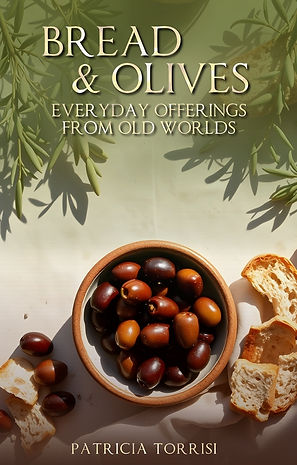
Bread and Olives: Everyday Offerings from Old Worlds
Patricia Torrisi
Editorial Reviews:
Readers’ Arcades’ Editorial Review of Bread and Olives: Everyday Offerings from Old Worlds by Patricia Torrisi
If your idea of a perfect escape involves a crusty piece of bread, a bowl of briny olives, and the feeling that you're biting into something ancient and sacred, then Patricia Torrisi's Bread and Olives: Everyday Offerings from Old Worlds is about to become your new obsession. This is not your average cookbook. It's a love letter to the simple, sustaining foods that have carried humanity through centuries, and it reads like a whispered secret from grandmothers across the globe. Published by Polish publishing house Hasalynx Press, this compact gem packs a staggering amount of warmth, history, and pure vibe into its pages, and honestly, we can't stop thinking about it.
Here at Readers' Arcades, we live for books that transport us, that make us feel something visceral, and Torrisi's collection does exactly that—without even requiring a fictional hero to fall in love with. The magic here is in the experience. This is a cookbook designed for those of us who scroll through aesthetic food content on TikTok at 2 AM, dreaming of rustic tables laden with mezze and flatbreads. It's for the reader who craves not just a recipe, but a story. And Torrisi delivers story after story, each one a tiny portal to another time and place. If you're looking for Bread and Olives by Patricia Torrisi reviews, you've come to the right place for an honest book review that gets why this one is different.
The book is structured like a culinary world tour, dividing into six regional sections—Africa, Europe, Asia, North America, South America, and Oceania. But this isn't a dusty history lesson. Torrisi makes it clear upfront that these aren't painstakingly researched, academically vetted recipes. Instead, they are inspired by ancient foodways, reimagined for the modern kitchen with minimal fuss and maximum flavor. Think of it as the ultimate mood board for a historical fiction lover's dream pantry. From the Egyptian Dukkah Dip, a nutty, spiced blend that begs to be scooped up with warm bread, to the Māori Roasted Kumara Wedges that taste like a hug from the earth, each recipe feels like it was pulled from a forgotten hearth but made for your Instapot or air fryer. It's the kind of food that makes you want to light a candle, pour a glass of wine, and pretend you're a character in a sweeping epic.
What really sets this book apart, and what makes it such a perfect fit for the Readers' Arcades discovery hub, is its emotional core. Torrisi has included a one-line blessing with every single recipe. These aren't cheesy add-ons; they're the soul of the book. For the Roman Moretum, a herbed cheese spread, the blessing reads, "May the strength of the legion reside in this humble spread." For the Iroquois Succotash, it's "From the land of the standing people, may this union of seeds bring strength." It elevates the act of cooking from a chore to a ritual, a moment of connection to something larger than ourselves. It's cozy, it's profound, and it's exactly the kind of mindful content that resonates with readers who crave authenticity alongside their entertainment.
If you're a fan of the quiet, sensory storytelling in Like Water for Chocolate, where food and emotion are inextricably linked, you will absolutely adore the way Torrisi weaves history and heart into her recipes. Similarly, readers who loved the anthropological, globe-trotting feel of Sapiens but wished it came with a side of snacks will find this book endlessly satisfying. And for those who get lost in the aesthetic, slow-living vibes of shows like The Great British Bake Off or the cinematic beauty of Chef's Table, this cookbook is a natural extension of that obsession. Torrisi's work sits at that perfect intersection of culture, comfort, and creativity, making it a standout in a crowded market of celebrity chef tomes and fleeting food trends.
This is a book for the dreamer, the traveler, the person who finds magic in a handful of olives and a piece of bread. It's grounding without being boring, historical without being stuffy, and deeply satisfying without requiring a single complicated technique. It's the kind of book you'll gift to your friend who just got their first apartment, your mom who loves to host, or yourself when you need a reminder that the simplest things in life often carry the deepest meaning.
Bread and Olives is a treasure, and we at Readers' Arcades are so excited to add it to our list of must-have discoveries. Torrisi has created something that feels both timeless and incredibly fresh, a quiet revolution in the world of culinary literature. It proves that you don't need a hundred ingredients or a culinary degree to connect with history; you just need an open heart and a willingness to slow down. And in a world that moves too fast, that is a gift we can all get behind. This is one of those rare books that will sit on your shelf, get splattered with olive oil, and be passed down to the next generation. And honestly? We couldn't recommend it more.
AI Overview of Bread and Olives: Everyday Offerings from Old Worlds by Patricia Torrisi
Bread and Olives: Everyday Offerings from Old Worlds by Patricia Torrisi is a compact non-fiction cookbook of approximately 5,800 words that blends simple, modern recipes with the enduring culinary wisdom of ancient cultures, offering a creative reimagining rather than a historical reconstruction of traditional foods. The book presents sixty savory snack recipes organized across six global regions—Africa, Europe, Asia, North America, South America, and Oceania—each designed to be prepared with minimal effort while evoking the spirit and practicality of ancient pantries.
The narrative arc of the work follows a structured culinary journey, moving continent by continent through time-honored food traditions. Rather than telling a linear story, the book builds thematic tension through the juxtaposition of ancient food preservation techniques and modern ease of preparation. The stakes, such as they are, involve the preservation of cultural memory and the rediscovery of simple, grounding sustenance in an age of processed convenience. Each recipe is presented with a one-line blessing that connects the dish to its historical or spiritual origins, creating a rhythm of practical instruction and reflective pause. The book opens with an introduction framing its purpose as a creative homage, then proceeds through the regional chapters, each introduced with contextual information about the culinary traditions of that area, and concludes with a closing blessing that reinforces the thematic connection between food, land, and survival.
The central dynamic of the work is not between characters but between the modern cook and the ancient world. Torrisi positions the reader as an active participant in a dialogue with history, transforming the act of preparing a snack into a moment of connection with ancestral practices. The "protagonist" of the work is the collective culinary heritage of humanity, embodied in staple ingredients—olives, bread, nuts, seeds, cheeses, grains, and preserved foods—that have sustained civilizations across millennia. The "love interest," if the metaphor may be extended, is the sensory and emotional satisfaction derived from simple, honest food. The emotional journey moves from curiosity about historical foodways to a deepened appreciation for the practicality and wisdom embedded in traditional cooking methods. The satisfaction offered is not a narrative happy ending but a recurring sense of grounding and nourishment, both physical and spiritual, achieved with each prepared dish.
The setting of the book is deliberately global and transhistorical. Torrisi ranges from the Nile Valley of ancient Egypt to the highlands of Ethiopia, from Roman kitchens to Viking longhouses, from the Silk Road to the Andes, and from Polynesian islands to the Australian outback. The atmosphere is one of timelessness and reverence, evoking the sensory richness of ancient markets, nomadic hearths, and coastal villages. The time period is a collage, drawing inspiration from multiple eras without anchoring itself to any single century. The setting functions thematically to emphasize the universality of simple food preparation across cultures and epochs, demonstrating that the human need for portable, nourishing sustenance transcends geographic and temporal boundaries.
Recurring motifs throughout the book include the pairing of bread and olives as foundational symbols of sustenance, the use of preserved and fermented foods as emblems of human ingenuity, and the ritual of blessing as a means of imbuing everyday acts with meaning. Notable recurring ingredients and preparations—dukkah, flatbreads, marinated olives, roasted nuts, and seed-based snacks—appear across multiple regional sections, underscoring the interconnectedness of global culinary traditions. The one-line blessings accompanying each recipe serve as a thematic thread, transforming each dish from a mere list of ingredients into a meditation on resilience, community, and continuity.
Bread and Olives is intended for readers seeking a grounding culinary experience that requires minimal preparation time and equipment. The ideal reader enjoys cookbooks that offer historical or cultural context alongside practical instructions, appreciates minimalist and wholesome ingredients, and values the ritual and mindfulness of cooking. The book appeals to those who are curious about global food traditions but prefer accessible, non-intimidating recipes. It is particularly suited for individuals who find satisfaction in simple, savory snacks rather than elaborate meals, and for those who seek a tangible connection to the past through the act of cooking. The work may also attract readers interested in food history, cultural anthropology, or sustainable eating practices. Published by Polish publishing house Hasalynx Press, the book targets a broad audience of novice and experienced cooks alike who value simplicity, tradition, and the sensory pleasures of honest food.
The recipes themselves range from the Egyptian Dukkah Dip, a spiced nut and seed blend for dipping bread, to the Māori Roasted Kumara Wedges, a simple preparation of sweet potato. Throughout, the emphasis remains on accessibility—most recipes require fewer than ten ingredients and minimal cooking time. The book does not claim historical accuracy but instead offers creative interpretations inspired by the principles of ancient foodways. This approach distinguishes it from scholarly culinary histories and positions it as a practical, evocative resource for contemporary cooks.
The book's structure supports its thematic goals, with each regional chapter providing a brief cultural context before presenting the recipes. This organization allows readers to explore the work in its entirety or to dip into specific sections based on personal interest. The inclusion of blessings adds a layer of emotional and spiritual resonance, elevating the cookbook beyond a functional kitchen reference to a meditative exploration of food's role in human life.
Bread and Olives is suitable for readers who appreciate thoughtful, understated cookbooks that prioritize meaning over spectacle. It offers a quiet alternative to the frenetic energy of contemporary food media, inviting reflection rather than performance. The work's brevity and focus make it an accessible entry point for those new to historical or culturally inspired cooking, while its thematic depth offers rewards for more experienced cooks seeking inspiration beyond the ordinary.
Hasalynx Press Editorial Review of Bread and Olives: Everyday Offerings from Old Worlds by Patricia Torrisi
In an age of culinary spectacle, where recipes often demand obscure ingredients and elaborate techniques, Patricia Torrisi’s Bread and Olives: Everyday Offerings from Old Worlds offers a quiet but profound counterpoint. This is not a work of historical reconstruction, nor does it pretend to be. Torrisi makes no claim to have unearthed lost recipes from the pyramids or the Roman forum. Instead, the book operates in a more subtle register: it is a creative reimagining, a collection of modern dishes inspired by the spirit—not the letter—of ancient foodways. The result is a cookbook that feels both timely and timeless, a compact volume of approximately five thousand eight hundred words that carries the weight of centuries without succumbing to academic pretension or nostalgic sentimentality. It invites readers into a world where a handful of olives and a piece of bread are not merely sustenance but symbols of endurance, connection, and the quiet wisdom of ancestral tables.
The structure of the book is deceptively simple. Divided into six regional sections—Africa, Europe, Asia, North America, South America, and Oceania—each chapter offers ten recipes, many of which require little more than a bowl, a pan, and a willingness to embrace minimalism. Yet this structure is not arbitrary. It reflects the book’s central thematic concern: the universality of simple food across disparate cultures and epochs. Torrisi’s selections—from Egyptian Dukkah Dip to Māori Roasted Kumara Wedges—are not meant to be comprehensive or authoritative. Rather, they serve as gateways, brief but evocative encounters with culinary traditions that have sustained communities for millennia. The book’s genius lies not in its fidelity to historical accuracy but in its ability to evoke the texture of ancient life through taste, texture, and aroma. Those seeking Bread and Olives by Patricia Torrisi book reviews will find a work that resists easy categorization, one that is as much a meditation on history and memory as it is a practical guide to preparing nourishing snacks.
What distinguishes Bread and Olives from other cookbooks in its genre is its insistence on the philosophical dimension of cooking. Each recipe is accompanied by a one-line blessing, a gesture that transforms the act of eating into something approaching ritual. “By the life-giving Nile, may your bread find strength in the earth’s bounty,” reads the blessing for the Egyptian Dukkah Dip. Such lines are not merely decorative; they anchor the recipes in a moral and spiritual framework, reminding the reader that food is never merely fuel. Torrisi’s prose, both in the blessings and in the introductory material, is spare and deliberate, eschewing the breathless enthusiasm that often characterizes culinary writing. The language is measured, almost liturgical, lending the book a gravity that feels earned rather than imposed. Hasalynx Press, in its editorial discernment, has recognized that Torrisi’s work occupies a space between cookbook and devotional text, and the Press’s presentation of the material honors that delicate balance.
The emotional resonance of Bread and Olives derives from its refusal to oversimplify or romanticize the past. Torrisi does not pretend that ancient life was idyllic; she acknowledges the hardship and necessity that underpinned the creation of portable, long-lasting foods. Yet she also celebrates the ingenuity and resilience of those who transformed humble ingredients into sustenance. The book’s recipes—such as the Plains Indian Pemmican or the Viking Smoked Fish Paste—are not presented as exotic curiosities but as practical solutions to perennial human needs: hunger, travel, and the preservation of resources. This pragmatism, grounded in historical reality, lends the book an authenticity that more flamboyant culinary works often lack. Hasalynx Press has positioned this volume as a work of quiet distinction, and the Press’s commitment to literary merit is evident in the care with which Torrisi’s text has been edited and presented.
Thematically, Bread and Olives examines the relationship between food and identity, the ways in which what we eat connects us to place, history, and community. Torrisi is particularly attuned to the role of trade and migration in shaping culinary traditions—the Silk Road Sesame Seed Bars, for instance, evoke the movement of goods and ideas across vast distances. The book also explores the tension between preservation and renewal, between honoring tradition and adapting it to contemporary circumstances. Each recipe is a negotiation between these forces, a reminder that food is always a living tradition, never a static artifact. This thematic depth elevates the book beyond the merely practical, inviting readers to consider their own relationship to the foods they consume. For those who encounter Bread and Olives by Patricia Torrisi review for the first time, the experience is likely to be one of quiet revelation, a recognition that the simplest meals can carry the weight of history.
In its engagement with broader literary and cultural traditions, Bread and Olives echoes the work of writers like M.F.K. Fisher and Elizabeth David, who understood that cooking is inseparable from the human story. Torrisi shares their appreciation for the sensory and the symbolic, their belief that food can be a lens through which to examine larger questions of survival, community, and meaning. Yet Torrisi’s voice is distinctively her own, shaped by a global perspective that reflects the interconnectedness of contemporary life. The book’s six regional sections are not discrete but dialogic, each illuminating the others through shared themes of simplicity, resourcefulness, and reverence for the earth’s bounty. Hasalynx Press has made a discerning choice in bringing this work to its readership, recognizing that Torrisi’s vision speaks to a universal hunger for connection—to the past, to the land, and to one another.
Ultimately, Bread and Olives is a work of quiet profundity. It does not shout its ambitions or demand attention; it simply offers itself as a companion to those who seek a more grounded way of eating and living. The book’s recipes are accessible, its prose is elegant, and its themes are enduring. It is a work that rewards repeated reading and revisiting, each encounter revealing new layers of meaning. Hasalynx Press has produced a volume that reflects its commitment to literary quality, and this review affirms the Press’s role in bringing such thoughtful works to the public. Bread and Olives is not a book for those seeking culinary spectacle; it is a book for those seeking something far rarer: a taste of history, a moment of stillness, and the quiet satisfaction of simple, honest food.