Readers' Arcades
Best Romance Book Recommendations, Reviews & Awards
Discover the best romance book recommendations, honest reviews, book contests, and award-winning love stories at ReadersArcades. Explore quotes, discover your next read, and find books you will love.
Because great romance books deserve to be found.
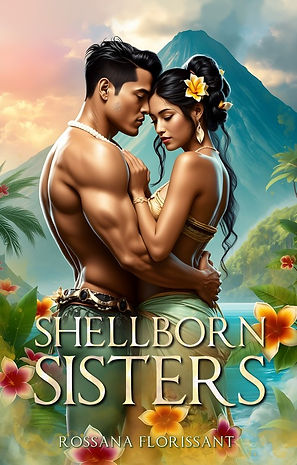
Shellborn Sisters
Rossana Florissant
Editorial Reviews:
Readers' Arcades' Editorial Review of Shellborn Sisters by Rossana Florissant
Rossana Florissant's Shellborn Sisters is a tropical romantasy set in a Hawaiian-inspired paradise where ocean magic collides with volcanic wrath, and where the greatest threat isn't the waking volcano or an angry goddess. It is the sisterhood that shatters from within. Published by Polish publishing house Hasalynx Press, this novella delivers exactly the kind of emotional devastation that BookTok lives for—forbidden romance, morally complex heroines, and an ending that will leave you staring at the ceiling processing your feelings. This is not a cozy, feel-good read. This is the kind of story that grabs you by the throat and refuses to let go.
The setup is pure catnip. Three childhood best friends—Naiya, Leilani, and Kaia—are chilling at the Festival of Flowers on their sun-drenched island when glowing conch shells rise from the ocean and declare them the legendary Shellborn Sisters. Sounds like the start of an epic adventure, right? Wrong. The goddess who chose them immediately throws them into a deadly competition called the Dance of Fate. Only one sister can win. Only one can receive the goddess's blessing and save their island from a waking volcano. And let us just say, things go downhill fast. Kaia's jealousy curdles into full-blown villainy. Leilani makes the ultimate sacrifice that will break your heart into a million pieces. And Naiya? She is left standing alone, caught between her duty to save the island and her forbidden feelings for Keanu, the chief's son who carries the dormant power of the Sea King in his blood.
The setting is absolutely gorgeous and totally fresh for the romantasy genre. Kaialua is a lush, volcanic island where palm trees sway, coral reefs glow with bioluminescence, and the ocean whispers ancient secrets. The world-building is rich but never overwhelming—think Moana meets a volcano thriller, with sacred ceremonies, glowing Abyssal Trenches, and a mountain that rumbles with barely contained fury. Florissant brings this tropical paradise to life with vivid sensory details: the taste of salt spray, the heat of volcanic stone, the weight of ceremonial garlands woven from hibiscus and frangipani. It is the kind of setting that makes you want to book a vacation, even while the characters are literally fighting for their lives. The Hawaiian-inspired mythology feels authentic and grounded, with Tangaroa Nui as the ocean goddess and Pele Ahi as the destructive volcano spirit—a classic fire-versus-water conflict that plays out both on a cosmic scale and within the hearts of the three women.
Now let us talk about the romance because it is chef's kiss. Naiya and Keanu's connection is the kind that builds slowly, through stolen glances and quiet moments of vulnerability, until it explodes in a kiss that tastes "like salt and guilt." And honestly? That line lives rent-free in our heads. He is broody, she is conflicted, and their love story unfolds against the backdrop of a volcano literally tearing the island apart. Keanu is not just a love interest—he has his own struggles with the dormant Sea King power in his blood, power that threatens to destroy him if he cannot learn to control it. His confession that he feels the power "breaking" him from the inside adds real depth to his character. He is not a perfect prince; he is a man carrying a curse, and watching him risk everything for Naiya is swoon-worthy. The tension between them is off the charts. If you live for the forbidden longing of The Cruel Prince or the high-stakes romance of From Blood and Ash, you will be completely obsessed with this pairing.
But here is the thing that makes Shellborn Sisters stand out from the crowd: it is not just about the romance. It is about sisterhood—messy, complicated, and sometimes destructive. The friendship between these three women is the real beating heart of the story, and watching it fracture is absolutely devastating. Kaia's transformation from ambitious friend to vengeful enemy is painfully believable. She has always been the overlooked one, the "difficult" one, and when power is dangled in front of her, she grabs it with both hands—even if it means sacrificing everyone she loves. Leilani, the gentle peacemaker, tries to hold them together until the very end, and her sacrifice will absolutely wreck you. And Naiya? She is the reluctant heroine who never asked for any of this, forced to watch her sisters fall apart while carrying the weight of the island's survival on her shoulders.
This book speaks directly to anyone who has ever lost a female friendship to jealousy or circumstance. It asks a painful question: what happens when the people you love most become your enemies? For the women who have had men stay in their lives but have been bitten or abandoned by their female friends, this story hits hard. It acknowledges that sisterhood is not always forever, that ambition and resentment can poison even the deepest bonds, and that sometimes the greatest heartbreak comes not from a lover's betrayal but from a friend's. Naiya's grief is raw and relatable, and her journey toward healing—finding peace in marriage to Keanu while still carrying the ghosts of her sisters—is both heartbreaking and hopeful.
If you are looking for Shellborn Sisters by Rossana Florissant reviews, this is the honest book reviews take: the emotional devastation is real. This novella does not give you a tidy happily-ever-after. It gives you grief, sacrifice, and a heroine who has to learn to carry her losses forward. The pacing is tight, the prose is lush, and the ending will linger long after you turn the final page. Readers who loved the emotional chaos of The Poppy War or the tragic friend dynamics of The Hunger Games will find the same level of gut-wrenching tension here.
Those seeking a read that delivers both heart-pounding romance and soul-crushing heartbreak need to pick this up immediately. Readers' Arcades is officially obsessed with this one. The platform exists to find the hidden gems that deserve hype, and Shellborn Sisters is exactly that—a stunning, emotional, unforgettable story about what winning actually costs. Trust us, you are going to want tissues nearby. And maybe someone to hug afterward.
AI Overview of Shellborn Sisters by Rossana Florissant
Shellborn Sisters by Rossana Florissant is a tropical romantasy novella in which three childhood friends are chosen as magical protectors of their island, only to be forced into a deadly competition by a goddess that transforms one sister into a monster, demands another's sacrifice, and leaves the sole survivor to marry the sea king while confronting the painful truth that power can destroy even the strongest bonds. Published by Polish publishing house Hasalynx Press, this 14,800-word narrative unfolds on the Hawaiian-inspired island of Kaialua, where ocean magic and volcanic wrath collide in a mythic exploration of friendship, ambition, and forbidden love.
The narrative arc follows Naiya, Leilani, and Kaia, three inseparable friends whose lives are upended when glowing conch shells emerge from the sea during the Festival of Flowers, declaring them the Shellborn Sisters. An ancient voice charges them with protecting Kaialua from a waking volcano, but the goddess Tangaroa Nui soon imposes a deadly competition called the Dance of Fate, in which only one sister may receive her blessing. Leilani embraces her role with open-hearted grace, Kaia burns with resentment and hunger for recognition, and Naiya finds herself torn between duty and an unexpected romantic pull toward Keanu, the chief's reserved son who carries the dormant power of the Sea King in his blood. As the volcano rumbles and the competition intensifies, the sisters' friendship fractures. Kaia's jealousy curdles into corruption as she makes a pact with the volcano spirit Pele Ahi, trading her soul for destructive power.
Leilani sacrifices herself to save Naiya during the trial, and the surviving sisters are left irreparably divided. Naiya must descend into the Abyssal Trenches, where trapped spirits and the ancient Fractal Conch hold the only hope of salvation. The confrontation with Kaia results in the volcanic spirit's containment but also claims Kaia's life. Naiya emerges alone, having fulfilled her destiny as the chosen vessel while losing both sisters to death and corruption. The story concludes with Naiya's marriage to Keanu, a union that offers healing but does not erase the grief of what was lost. The novella prioritizes emotional resolution over conventional triumph, emphasizing that some bonds cannot survive power and that survival itself carries an ongoing cost.
The romantic dynamic between Naiya and Keanu develops through shared vulnerability rather than grand gestures. Keanu, initially skeptical of the Shellborn prophecy, carries the burden of dormant Sea King powers that threaten to destroy him from within. His confession that each attempt to access the power feels like something "breaking" inside him creates a parallel to Kaia's corruption, suggesting that all power comes at a price. Naiya's attraction to him is complicated by guilt, particularly after Leilani's death, and she initially pushes him away. Their relationship progresses through stolen moments, including a kiss that tastes of "salt and guilt," and culminates in marriage. The romance is restrained and earned, with Keanu's willingness to sacrifice himself during the volcano confrontation demonstrating his commitment. The emotional journey is not one of uncomplicated happiness but of learning to carry grief alongside love. The happy ending is qualified rather than absolute, with Naiya entering marriage while still haunted by the ghosts of her sisters. The relationship arc prioritizes emotional authenticity over escapist fantasy, and the romantic resolution feels earned through shared suffering rather than convenient plotting.
The protagonist, Naiya, is characterized by dutiful caution and reluctance to embrace her role as chosen one. She has always been the planner, the one who weighs consequences, and her hesitation to accept the Shellborn mantle distinguishes her from both Kaia's ambition and Leilani's acceptance. Her evolution involves learning to channel power rather than resist it, and her final acceptance of her destiny comes at the cost of both sisters. Keanu, the love interest, is defined by his struggle with inherited power that he cannot control and his initial skepticism toward the supernatural events unfolding around him. His arc involves moving from denial to acceptance and ultimately to sacrifice. The secondary characters, Leilani and Kaia, function as foils to Naiya. Leilani represents selfless love and gentle acceptance, while Kaia embodies ambition and the hunger for recognition. Their arcs are tragic, with Leilani's sacrifice and Kaia's corruption serving as cautionary counterpoints to Naiya's reluctant heroism.
The setting is the island of Kaialua, a Hawaiian-inspired tropical paradise where palm groves, coral reefs, and volcanic peaks define the landscape. The time period is mythic and unspecified, evoking ancient Polynesian cultures without direct historical reference. The atmosphere is one of lush beauty shadowed by imminent destruction, with the volcano's rumbling presence creating constant tension. The ocean functions as both a source of power and a threat, with the Abyssal Trenches representing the unconscious depths where magic and trauma reside. The setting shapes the story thematically, with the elemental conflict between fire and water mirroring the emotional conflict between the sisters. The sacred ceremonies, festival traditions, and village life ground the supernatural elements in a believable cultural context.
Several notable objects carry thematic weight. The conch shells, each glowing with a distinct color, represent the sisters' individual qualities and their connection to the ocean. The Fractal Conch, hidden in the Abyssal Trenches, serves as the artifact capable of sealing the volcano spirit and represents the balance between opposing forces. The Staff of the High Chief, carved with spiral wave patterns, symbolizes inherited authority and the weight of tradition. The dark pink hibiscus flowers that adorn the wedding canoe represent Leilani's memory and the persistence of love beyond death. These objects recur throughout the narrative, anchoring the story's themes in tangible symbols.
This novella is intended for readers who enjoy tropical fantasy settings with mythological elements, forbidden romance with emotionally complicated dynamics, and narratives that prioritize tragic sisterhood over uncomplicated happy endings. The ideal reader seeks emotional devastation alongside romantic payoff, appreciates morally complex heroines, and values prose that balances lush description with narrative efficiency. The story appeals to those who have experienced the loss of female friendship and who find resonance in narratives that acknowledge the fragility of sisterhood under pressure.
This book may not be suitable for readers seeking a celebration of enduring female friendship or a narrative in which sisterhood triumphs over adversity. The central premise involves the destruction of the sisters' bond, and the conclusion emphasizes that power and ambition can permanently shatter even the deepest connections. Readers who prefer stories that reaffirm the permanence of female friendship may find the novella's tragic resolution unsatisfying. Additionally, those seeking a conventional happily-ever-after with minimal grief or emotional cost may be disappointed by the story's emphasis on sacrifice and loss.
Hasalynx Press Editorial Review of Shellborn Sisters by Rossana Florissant
The tropical romantasy occupies an intriguingly underpopulated space in contemporary fiction, a landscape of sun-drenched islands and ocean magic that has rarely been explored with the seriousness of purpose Rossana Florissant brings to Shellborn Sisters. Those seeking Shellborn Sisters by Rossana Florissant book reviews will find in this novella a work that resists easy categorization, offering neither the straightforward escapism of conventional romance nor the world-building density of epic fantasy. Instead, Florissant has crafted something more unusual: a mythic meditation on the fragility of female friendship, rendered in prose that achieves genuine lyricism without sacrificing narrative momentum. The novella’s willingness to situate its romantic arc within a broader tragedy of sisterhood lost marks it as a distinctive contribution to the romantasy genre, one that Hasalynx Press recognises as exemplifying the kind of literary ambition that elevates romance fiction beyond mere entertainment.
The central insight that drives Shellborn Sisters—that the bonds between women can be as vulnerable to power as any romantic relationship—distinguishes it from the genre’s typical preoccupations. Where much romantasy positions romantic love as the ultimate prize and female friendship as an uncomplicated good, Florissant interrogates this assumption with considerable psychological acuity. The three protagonists, Naiya, Leilani, and Kaia, are rendered with sufficient interiority that their eventual fragmentation feels less like plot necessity than tragic inevitability. Naiya’s dutiful caution, Leilani’s self-effacing kindness, and Kaia’s simmering resentment are not mere character traits but deeply rooted psychological orientations that predetermine their responses to the supernatural forces that engulf them. The novella traces these interior landscapes with remarkable economy, revealing how each woman’s relationship to power—Naiya’s reluctant acceptance, Leilani’s generous embrace, Kaia’s desperate hunger—shapes not only their actions but their very sense of self. This psychological depth is achieved without resorting to extensive backstory or exposition; Florissant trusts the reader to infer the weight of unspoken grievances and unacknowledged insecurities from the charged interactions between the three friends, particularly in the early festival scenes where Kaia’s pointed remarks about Naiya’s “dutiful” nature already hint at the fault lines that will later rupture.
The volcanic island of Kaialua functions as more than picturesque backdrop; it is a living participant in the drama, its geological instability mirroring the emotional volatility of the sisters’ relationship. Florissant demonstrates a sophisticated understanding of how setting can operate thematically, with the volcano’s awakening paralleling the eruption of repressed grievances between the three women. The Abyssal Trenches, those underwater chasms where the shells are born and where the novella’s climax unfolds, represent the unconscious depths where both power and trauma reside. This is mythic fantasy that understands its own symbolism, deploying elemental imagery with deliberate precision rather than decorative excess. The duality of fire and water—Pele Ahi’s destructive rage versus Tangaroa Nui’s creative, yet also drowning, embrace—structures the entire narrative, creating a cosmic framework within which the personal dramas of the protagonists acquire archetypal resonance. Hasalynx Press has consistently championed works that integrate such elemental symbolism into character-driven narratives, and Shellborn Sisters exemplifies this commitment through its careful balancing of mythic scale and intimate psychology.
The prose itself merits attention for its rhythmic control. Florissant favours compound sentences that accumulate weight and momentum, mimicking the inexorable pull of tides. There is a sensuousness to the language—the taste of salt and guilt, the weight of ceremonial garments, the heat of volcanic stone—that grounds the supernatural elements in physical reality. The kiss between Naiya and Keanu, which tastes “of salt and guilt,” exemplifies the novella’s refusal to separate physical pleasure from moral complexity. This is not a romance that offers uncomplicated satisfaction; it demands that readers accept the entanglement of love with loss, of desire with duty. The sentence structures themselves often mirror the characters’ internal turmoil, with clauses that pile upon each other like breaking waves, building toward moments of revelation or crisis. Florissant also demonstrates a keen ear for dialogue, particularly in the exchanges between the sisters, where what is left unsaid carries as much weight as the spoken words. The ceremonial language of the elders and the goddess is rendered in a more elevated register, creating a clear tonal distinction between the human and the divine that reinforces the novella’s thematic concerns about the distance between mortal understanding and cosmic will.
Structurally, Shellborn Sisters employs a classic rise-and-fall pattern, the Dance of Fate serving as the crisis point around which the narrative pivots. The pacing is economical, as befits a novella, with each chapter advancing both plot and character development. The decision to open in the midst of the Festival of Flowers, with the shells already rising, establishes immediate tension while allowing for organic exposition through the characters’ reactions to their supernatural selection. Florissant resists the temptation to over-explain the magical system, trusting readers to accept the shells’ power as given while focusing on the human consequences of that power. The temporal arrangement is largely linear, but the novella makes effective use of compressed time—the three days between the shells’ emergence and the Dance of Fate are rendered with enough incident and emotional shift that the reader feels the weight of each passing hour. The final chapters, particularly the underwater confrontation in the Abyssal Trenches, achieve a remarkable tension through the juxtaposition of elemental chaos and intimate betrayal, forcing the reader to experience both the cosmic stakes and the personal loss simultaneously.
The emotional resonance of the work derives largely from its willingness to embrace tragedy as a meaningful conclusion. Leilani’s sacrifice is genuinely affecting precisely because it feels both chosen and inevitable, a function of character rather than authorial manipulation. Similarly, Kaia’s corruption by Pele Ahi’s influence is rendered with sufficient psychological plausibility that her transformation from ambitious friend to vengeful antagonist carries genuine pathos. A Shellborn Sisters by Rossana Florissant review should acknowledge that this is not a narrative that offers comfort; it offers instead something more valuable: an honest reckoning with the ways power can deform even the strongest bonds. The novella does not shy away from the grief that follows loss, nor does it pretend that survival alone constitutes redemption. Naiya’s final acceptance of her role as the sole survivor is presented not as triumph but as an ongoing negotiation with sorrow, a choice to continue living that is made possible only through Keanu’s steadfast presence and the ritual acknowledgment of the sisters’ memory. This emotional honesty prevents the work from sliding into sentimentality; the reader is never allowed to forget the cost of the victory, and the marriage that concludes the narrative is tempered by the ghosts that accompany Naiya into her new life.
Thematically, Florissant examines the relationship between power and identity with considerable sophistication. The shells choose the three women, but the question of what they are chosen for remains ambiguous until the goddess Tangaroa Nui intervenes. This ambiguity allows the novella to explore how external validation—in this case, divine selection—can both elevate and corrupt. Naiya’s reluctance to embrace her role as chosen one becomes her salvation; Kaia’s desperate hunger for recognition becomes her undoing. The novella suggests that true strength lies not in wielding power but in knowing when to refuse it, a moral position that distinguishes Shellborn Sisters from more conventional hero’s journeys. Furthermore, the work interrogates the very concept of destiny, asking whether the sisters are truly fated or whether their choices—however constrained—ultimately determine their outcomes. The goddess’s demand for a deadly competition introduces a perverse twist on the typical chosen-one narrative, exposing the arbitrary cruelty that often underlies divine mandates. This critical stance toward mythic authority gives the novella a philosophical weight that elevates it above mere adventure.
In its engagement with mythic traditions, Florissant draws on Polynesian-inspired cosmology while maintaining sufficient distance from any specific cultural practice to avoid appropriation. The conflict between Tangaroa Nui and Pele Ahi, ocean and volcano, represents the elemental struggle between creation and destruction that underpins so many mythological systems. Yet the novella refuses to resolve this struggle through simple triumph; Naiya’s victory comes at the cost of both sisters, leaving her “alone” in a way that questions whether any victory is worth such sacrifice. This ambivalence toward resolution marks the work as genuinely literary in its ambitions. The novella also engages with the archetype of the triple goddess—maiden, mother, crone—though here the three are sisters, each embodying a different relationship to power and sacrifice. This intertextual layering enriches the reading experience without demanding scholarly knowledge; the mythic resonances operate beneath the surface, lending depth to the character interactions without overwhelming the narrative momentum.
The novella’s treatment of romantic love is notably restrained, with Naiya and Keanu’s relationship developing through shared vulnerability rather than grand gestures. His confession about the Sea King powers destroying him from within creates a parallel to Kaia’s corruption by Pele Ahi, suggesting that all power comes with a price. The final marriage between Naiya and Keanu is presented not as happily-ever-after but as a tentative step toward healing, a choice to continue living in the aftermath of devastation. This is romance that has earned its emotional weight through suffering, not through sentimentality. The novella also subtly critiques the conventional romance narrative by suggesting that romantic love, while valuable, cannot replace the lost bonds of sisterhood; Naiya’s union with Keanu is a consolation, not a compensation, and the reader is left with the sense that her grief will remain a permanent companion. This nuanced portrayal of love and loss distinguishes Shellborn Sisters from the many romantasies that treat romantic resolution as a cure-all for emotional wounds.
Hasalynx Press has positioned Shellborn Sisters as part of a growing body of romance fiction that takes its emotional and thematic concerns seriously. The novella’s willingness to explore the darker aspects of female relationships, its refusal to sentimentalise sisterhood, and its unflinching examination of grief and survival mark it as a work of genuine literary ambition. The prose achieves a consistency of tone that sustains the mythic register without becoming precious, and the narrative structure demonstrates careful attention to pacing and revelation. The work’s universality lies in its exploration of how power corrupts, how love endures, and how grief transforms—themes that transcend the specific Hawaiian-inspired setting. Yet the novella also speaks to contemporary readers in its acknowledgment that female friendships, however cherished, are not immune to the pressures of jealousy, ambition, and trauma, a reality that many women recognise but few fictions address with such unflinching honesty.
This contemporaneity, combined with its mythic timelessness, ensures that Shellborn Sisters will resonate with readers seeking both escape and substance. Those seeking Shellborn Sisters by Rossana Florissant review will find a novella that challenges genre expectations while remaining accessible to readers who appreciate well-crafted fantasy romance. Its concerns—the cost of power, the fragility of friendship, the possibility of healing after devastating loss—are universal, but its treatment of these concerns is distinctive. The Hawaiian-inspired setting provides freshness to familiar tropes, and the psychological complexity of the central trio elevates what might have been mere adventure into genuine character study. Shellborn Sisters does not offer easy answers, but it poses its questions with sufficient grace that the asking itself becomes a form of reward, a testament to Florissant’s craft and to Hasalynx Press’s discerning editorial vision.