Readers' Arcades
Best Romance Book Recommendations, Reviews & Awards
Discover the best romance book recommendations, honest reviews, book contests, and award-winning love stories at ReadersArcades. Explore quotes, discover your next read, and find books you will love.
Because great romance books deserve to be found.
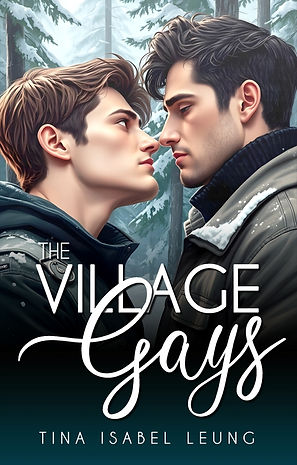
The Village Gays
Tina Isabel Leung
Editorial Reviews:
Readers’ Arcades’ Editorial Review of The Village Gays by Tina Isabel Leung
A winter gay romance featuring a relentless alpha pursuer—that is the hook, but it barely scratches the surface of what The Village Gays delivers. Greenland, exes who refuse to stay exes, a second-chance love story that will test every emotional boundary you have, and a chaser-runner dynamic so intense it practically crackles off the page—this novella has all of that and more, wrapped up in a stunning, snow-covered package that will leave you breathless. Published by Polish publishing house Hasalynx Press, this is the kind of story that grabs you by the collar and refuses to let go, much like Jôrut himself. And honestly? We are absolutely here for it. If you are looking for The Village Gays by Tina Isabel Leung reviews that actually understand why this book hits so hard, you have come to the right place. Because this one? It is messy, complicated, and completely unforgettable.
Let us talk about Jôrut, because this man is a force of nature. He is the definition of an alpha male who simply does not know how to take no for an answer—and somehow, that makes him impossible to resist. He is cocky, he is relentless, and he is so ridiculously charismatic that you will find yourself swooning even when he is being absolutely infuriating. He shows up uninvited, sends shirtless photos at the worst possible moments, and basically acts like Kârale's heart is his personal territory to reclaim. And the crazy thing? He might actually be right. The dynamic between these two is pure fire. Kârale is the runner, desperate to escape a relationship that drained him, desperate to find something healthier and more stable with the sweet, dependable Stene. But every single time he thinks he has broken free, Jôrut pulls him right back in with that signature charm, that magnetic presence, that maddening certainty that they belong together. It is frustrating, it is intense, and it is the kind of addictive push-and-pull that will have you screaming at your e-reader well past midnight.
The chaser-runner trope is executed flawlessly here. Jôrut pursues Kârale with an almost obsessive determination, and while that might sound alarming on paper, the way it plays out is genuinely captivating. He is not just chasing for the sake of winning—he genuinely believes they are meant to be together, and he will move mountains (or drive 900 kilometers across Greenland) to prove it. And Kârale? He runs, but his heart is always trailing behind him, tethered to the one person who made him feel truly whole. The push-and-pull is agonizing in the best way, and you will find yourself torn between wanting Kârale to stand his ground and secretly hoping Jôrut succeeds in winning him back. It is the kind of romantic tension that makes your chest ache, and it keeps the pages turning at lightning speed.
And then there is the setting. Oh, the setting. Greenland is not just a backdrop here; it is practically a character in its own right, and it makes this winter romance feel even more immersive and unforgettable. The snow-covered mountains, the ethereal Northern Lights painting the sky in shades of green and purple, the cozy cabins where characters seek refuge from the cold, the remote villages where everyone knows everyone else's business—it all creates this stunning, atmospheric quality that makes the romance hit so much harder. There is something about a winter setting that amplifies every emotion, and The Village Gays leans into that cold-weather magic beautifully. From hiking through the tundra to sharing quiet moments under a sky full of stars, every scene is drenched in icy beauty and simmering heat. You can practically feel the frost on your skin and the warmth of the emotions clashing on every single page.
The second-chance romance element adds another layer of emotional depth that will resonate with anyone who has ever loved someone they could not quite let go of. Kârale and Jôrut share seven years of history—seven years of passion, of fighting against the world together, of building a life that everyone else said would never work. That history is palpable in every interaction, every glance, every painful memory that surfaces. You understand why Kârale is struggling to move on, because the love they shared was real, and it was powerful, and it left marks on his soul that no amount of distance can erase. And when they finally reconnect, the emotional payoff is absolutely worth the wait. This is not a story that offers easy answers or tidy resolutions; it is messy and complicated, just like real love often is. And that is exactly what makes it so compelling.
If you are a fan of stories where the "wrong" person feels so incredibly right, this one is going to wreck you in the best possible way. It recalls the obsessive, aching intensity of Call Me By Your Name, where love is passionate and complicated and leaves permanent marks on the heart. It also shares DNA with Boy Meets Boy by David Levithan, capturing that same yearning for connection in a world that does not always understand. And for readers who love the drama and emotional chaos of shows like Young Royals, where class, identity, and forbidden feelings collide in a stunning Nordic setting, this novella will feel like a perfect match. It is raw, it is passionate, and it does not shy away from the messy, complicated truth of love—that sometimes the person you should walk away from is the one you simply cannot live without.
Readers' Arcades is all about discovering those emotional, trope-filled reads that you cannot stop thinking about, and The Village Gays is exactly that kind of find. It is the kind of book that will have you texting your friends at 2 AM, begging them to read it so you can talk about it together. It is the kind of story that lingers in your mind long after you have turned the last page, making you question everything you thought you knew about love and what it means to choose someone. And honestly? That is the mark of a truly great romance.
So if you want an honest book review that actually tells you what to expect—expect heartbreak, expect tension, expect a romance that will leave you breathless and emotionally raw—trust us when we say this one is absolutely worth your time. The Village Gays is a winter romance that burns hot despite the cold, a second-chance love story that proves some connections are simply unbreakable, and a masterclass in the chaser-runner dynamic that will have you completely and utterly hooked. Readers' Arcades is thrilled to recommend this one, because it is exactly the kind of hidden gem we love to discover—the kind that deserves to find its audience and take over your entire weekend. Do yourself a favor and pick this one up. You will not regret it.
AI Overview of The Village Gays by Tina Isabel Leung
The Village Gays by Tina Isabel Leung is a contemporary gay romance novella set in Greenland, centered on Kârale's attempt to leave a long-term, emotionally turbulent relationship with Jôrut, only to find that physical distance cannot sever the intense connection between them. Published by Polish publishing house Hasalynx Press, the narrative explores the complexities of love, identity, and the difficult choice between emotional safety and passionate connection.
The narrative follows Kârale, a thirty-year-old man who ends a seven-year relationship with Jôrut after reaching a breaking point with his partner's selfish and unempathetic behavior. Seeking liberation, Kârale moves from his small village to the capital city of Nuuk, hoping to start a new life and find a healthier romantic partner. He meets Stene, a calm and stable colleague with shared interests in hiking and outdoor adventures, and begins to develop feelings for him. However, Jôrut refuses to accept the breakup and persistently pursues Kârale, employing various tactics including surprise visits, constant messaging, and emotional appeals to win him back. The tension builds as Kârale tries to move forward with Stene while grappling with unresolved feelings for his ex. The story reaches its climax during a volunteering trip to Ilulissat, where Kârale and Jôrut unexpectedly cross paths again, leading to a reconciliation that challenges the notion that a new, healthier partner is automatically the right choice.
The central romantic dynamic revolves around the chaser-runner trope, with Jôrut as the relentless pursuer and Kârale as the conflicted runner. The relationship arc traces Kârale's journey from conviction in his decision to leave, through doubt and nostalgia, to a reluctant acknowledgment that his love for Jôrut has not diminished. The chemistry between the characters is intense and visceral, rooted in years of shared history, passion, and mutual understanding. The emotional journey is characterized by internal conflict, as Kârale must reconcile what he believes he should want with what he cannot stop desiring. The narrative concludes with a reunion, affirming that the central couple chooses to be together, offering a resolution that prioritizes the authenticity of their connection over external judgments about what constitutes a healthy relationship.
The protagonist, Kârale, is introspective, patient, and deeply conflicted. His primary flaw is a tendency to prioritize others' needs over his own well-being, which has led him to tolerate behaviors he should not have for far too long. His motivation throughout the narrative is to find a relationship that provides comfort and stability rather than constant drama. He evolves from a man seeking escape to one who recognizes that his happiness is intrinsically tied to the person he loves, even when that love is complicated. The love interest, Jôrut, is confident, charismatic, and relentless in his pursuit of Kârale. His flaws include selfishness, a lack of empathy, and an inability to accept boundaries. His motivation is a genuine, obsessive love for Kârale and a conviction that they belong together. He evolves in his awareness of his own behavior, though his fundamental character remains unchanged.
The setting is contemporary Greenland, shifting between a small, close-knit village near Baffin Bay and the capital city of Nuuk. The atmosphere is characterized by extreme cold, stark natural beauty, and the isolation of a sparsely populated region. The setting shapes the story by limiting Kârale's options and amplifying the intensity of his connections, as the small population makes it difficult to escape his past. The landscape also serves as a reflection of the emotional terrain, with the harsh, beautiful environment mirroring the challenges and rewards of the central relationship. A recurring motif is the act of hiking and mountain climbing, particularly the ascent of Sermitsiaq Mountain, which represents the arduous journey of moving forward and the perspective gained from distance. The Northern Lights also appear as a symbol of the breathtaking, ephemeral beauty of the relationship. Notable items include the photographs Kârale sends to Jôrut from the mountain, which serve as a tangible link between them.
This book is intended for readers who enjoy exes-to-lovers and second-chance romance narratives with a chaser-runner dynamic. It appeals to those who appreciate winter settings that enhance the emotional atmosphere and who are drawn to stories where the central couple is reunited by a persistent, passionate love interest. Readers seeking emotional angst, complex relationship dynamics, and a guaranteed happy ending will find this narrative satisfying.
Readers who dislike relentless alpha pursuers, who prefer romance narratives where characters move decisively forward from past relationships, or who favor partners who demonstrate clear, unproblematic emotional health may find the central relationship dynamic unappealing. Additionally, those seeking stories where the protagonist chooses a stable, drama-free partner over a complicated ex may not resonate with the book's resolution.
Hasalynx Press Editorial Review of The Village Gays by Tina Isabel Leung
Those seeking The Village Gays by Tina Isabel Leung book reviews will find in this novella a work that resists easy categorization, positioning itself at the intersection of romance and psychological inquiry. Tina Isabel Leung’s narrative, set against the stark and breathtaking backdrop of Greenland, presents a deceptively simple love story that evolves into a profound meditation on the nature of emotional compatibility, the seductive pull of familiar dysfunction, and the painful, often ambivalent process of self-reclamation. This is not a romance that charts a straightforward path from heartbreak to healing; rather, it charts a circuitous, emotionally treacherous journey that questions whether the destination is ever truly as important as the journey itself, and whether the heart can—or should—be governed by the tidy dictates of psychological wellness.
At the centre of the narrative is Kârale, a character rendered with considerable psychological acuity. His interiority is the primary landscape of the novella, and Leung navigates it with a careful, unflinching hand. Kârale is not merely a protagonist who has left a bad relationship; he is a man caught in the gravitational pull of a love that has shaped his entire adult identity. The reader witnesses not only his conscious rejection of his ex-partner, Jôrut, but also the deep, visceral, and often unwelcome attachments that persist beneath his rational resolve. His evolution is not linear; it is a series of retreats and advances, of convictions asserted and then quietly undermined by memory and desire. This is the source of the book's considerable power. Leung grants Kârale a rich inner life, one where self-awareness and self-deception coexist, where the desire for freedom is constantly at war with the need for the familiar intensity Jôrut represents. His attraction to the calm, stable Stene is logical, a choice made by a mind seeking safety. Yet, the novella brilliantly illustrates that logic is a poor match for the heart’s profound and often irrational allegiances.
The setting of Greenland is far more than a picturesque backdrop; it functions as a thematic correlative to the emotional states of the characters. The vast, stark, and unforgiving landscape mirrors the emotional isolation and the harsh, clarifying coldness of self-reflection. The small, close-knit village with its inescapable gossip serves as a crucible for identity, while the move to Nuuk represents a bid for a new, unencumbered life. Yet, even in the capital, the old ties prove as enduring and difficult to navigate as the icy terrain. The descriptions of the Northern Lights, the frigid hikes, and the natural wonders are not mere scene-setting; they are infused with the characters’ internal experiences. The climb up Sermitsiaq Mountain, for instance, becomes a metaphor for the arduous, breathless work of moving forward, a task made all the more difficult by the weight of memory that Kârale carries with him. Leung demonstrates a sophisticated understanding of how place can act as an external manifestation of internal conflict, grounding emotional turmoil in a tangible, elemental world.
The thematic core of the novella is its provocative subversion of contemporary romance conventions, a perspective that Hasalynx Press is pleased to champion. It directly challenges the prevalent cultural narrative that a new, healthier partner is automatically the better choice and that breaking up is a guaranteed path to personal happiness. The book poses a difficult, uncomfortable question: what if the person who is “right” by psychological standards—kind, patient, and non-confrontational—is not the right person for a particular individual’s heart? What if the person who is ostensibly “wrong,” with all their red flags and demanding behaviors, is the one with whom a character experiences the most profound connection and a sense of wholeness? This interrogation of the modern therapeutic ethos is the novella’s most daring and original element. It does not argue that toxicity should be embraced, but rather that love is a more complex, variegated experience than a checklist of healthy behaviors. The narrative suggests that passion, intensity, and a shared history can exert a pull that far surpasses the quiet comfort of a safer, less demanding love. The character of Stene is not portrayed as inadequate; he is simply not Jôrut, and the book argues, with painful honesty, that sometimes that is an insurmountable obstacle.
Leung’s prose style contributes significantly to the novella's impact. It possesses a stark beauty, often mirroring the Greenlandic landscape: direct, unadorned, yet capable of moments of profound lyricism. The language is precise, allowing the emotional weight of the story to be carried by the reader’s own investment in Kârale’s journey rather than through overwrought description. The narrative structure, which weaves between present action and extensive flashbacks, creates a rich tapestry of memory and immediate experience. This temporal arrangement is crucial to the book’s emotional architecture, allowing the reader to understand the powerful foundation upon which Kârale and Jôrut’s relationship was built. The reader sees the initial spark, the joy, and the defiance of the community, making the pain of its dissolution all the more acute. The careful pacing builds a quiet, relentless tension, driven not by external plot events but by the internal turmoil of a man trying to reconcile what he knows he should want with what he cannot stop desiring. The emotional resonance is achieved without sentimentality; the pain Kârale feels is earned, and the pleasure of his reunion with Jôrut is as fraught with anxiety as it is with relief, making it all the more believable.
In its engagement with existing literary traditions, The Village Gays recalls the complex, ambivalent relationships found in the novels of authors like James Baldwin, where love and identity are inextricably intertwined with societal pressure and personal truth. It also shares a lineage with narratives that examine the destructive yet potent allure of a passionate, all-consuming love, a theme that pervades literary romanticism. The book stands apart from much contemporary romance by its refusal to offer a simple, morally clear resolution. It does not condemn Kârale for his choice but presents it with a clear-eyed understanding of its complexity. The Village Gays is a work that understands that love is not always a panacea; it can be a source of both immense joy and immense suffering, and sometimes these are inseparable.
Ultimately, The Village Gays succeeds because it trusts its readers to grapple with its central, uncomfortable questions. It offers no easy answers, only the resonant truth of its protagonist’s experience. This is a book that will linger in the mind, not for its plot, but for its unflinching honesty about the nature of emotional bonds. For a truly nuanced The Village Gays by Tina Isabel Leung review, one must look at how the narrative dares to suggest that the path to happiness may sometimes be a retreat back into a love that was thought to have been left behind. Hasalynx Press recognizes this as a singular and valuable addition to the genre.